


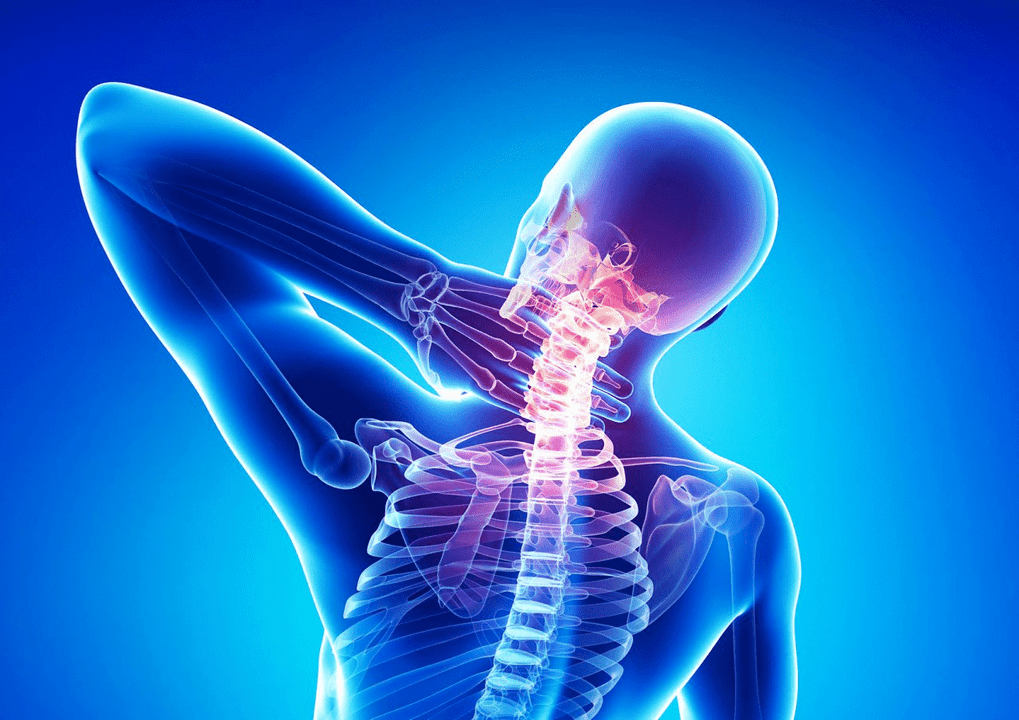
A sedentary lifestyle or, conversely, physical overload, injuries and poor posture can all have a negative impact on the spine.The result is osteochondrosis, a chronic degenerative disease of the vertebrae and discs.To some extent, this pathology is present in every elderly person, but at the same time, the disease has a tendency to develop earlier - in people aged 30-40 years.Although osteochondrosis is an irreversible disease, its manifestations can be reduced and quality of life significantly improved.We'll tell you what you can do next.
What is osteochondrosis?
This disease causes deformation and destruction of the vertebrae.Additionally, the discs undergo atrophic changes—the discs flatten, rupture, and stop performing their shock-absorbing function.As a result, the vertebral bodies can contact and compress nerve endings.Pathologically, it is accompanied by symptoms such as pain and limited joint movement.
According to the location of the injury, it can be divided into osteochondrosis in the cervical, thoracic and lumbar regions.Type I and III disorders most commonly occur at the transition between the static and moving parts of the spine.The vertebrae in the neck and lower back are put under increased pressure, leading to degenerative changes.
disease cause

Osteochondrosis is often called a disease of civilization.Modern life does not require active physical activity, so many people face the problem of decreased muscle tone.Weak muscles are unable to support the spine in the correct position, and postural problems begin to occur.If you add to this the static load on the spine from prolonged sitting or standing work, as well as excess weight and bad habits, it becomes clear why many people under the age of 40 develop osteochondrosis.
The following factors contribute to the emergence of the disease:
- Back injuries;
- Overload during irregular strength training;
- Habit of stooping when walking and sitting with uneven posture;
- Frequent lifting of heavy objects, with the load on the back rather than the legs;
- Impact loads on the spine (for example, between transport drivers).
In addition, genetic predispositions, certain endocrine system disorders, and other disorders of the musculoskeletal system may also lead to osteochondrosis.During its development, the pathology passes through several stages, so it is important to pay attention to the smallest changes in health.
Symptoms of osteochondrosis

The initial stage in the development of the disease is rickets.At this stage, degenerative changes only affect the intervertebral discs.Few patients notice symptoms of rickets:
- Mild pain often occurs in the back and neck;
- Mild difficulty turning head;
- Postural impairment (bending, raising one shoulder relative to the other, forward bending of the lower back, etc.);
- fatigue.
These symptoms may appear at a young age (20-25 years old) but do not cause severe discomfort.Symptoms of osteochondrosis appear after approximately 35 years of age due to complications.In this case, the patient has noticed severe pain, which may be localized or distant.
If the cervical spine is injured |
If the lumbar area is damaged |
|---|---|
|
|
Diagnosis of osteochondrosis
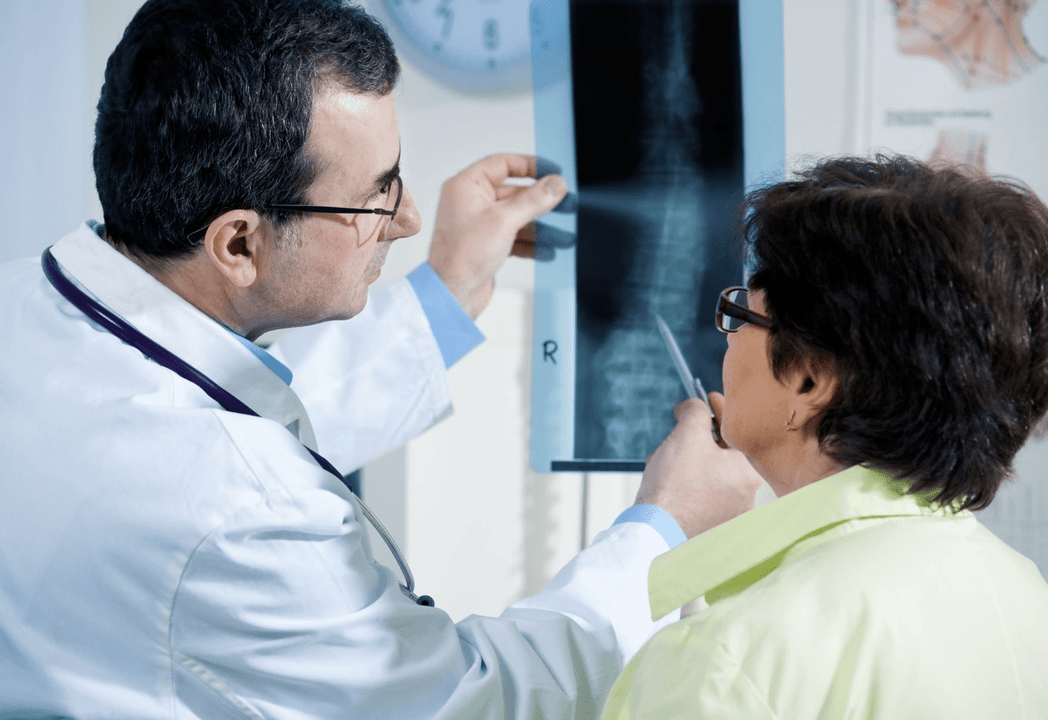
The disease is determined by a neurologist or chiropractor based on the patient's complaints and data from multiple tests:
- Radiographs of two projections of the spine and its individual segments;
- Magnetic resonance imaging (MRI).
Additionally, patients may want to consult with therapists and other specialties about chronic conditions that may have similar symptoms or worsen the course of osteochondrosis.For example, pain under the shoulder blades and collarbone can trigger cardiovascular disease.
Tablets and vitamins for osteochondrosis treatment
To relieve pain, eliminate muscle spasms, and reduce inflammation, your doctor may prescribe analgesics in the form of pills and injections.Long-term use of tablets is not allowed due to possible side effects.According to the instructions, take the drug continuously for no more than 5-7 days, after which other measures are required.
When nerve roots in various parts of the spine become compressed, not only pain may occur, but spasms and muscle tension may also occur.Experts believe this is the body's response to pain.Muscle relaxants are used to relax muscles.According to the instructions, the product increases peripheral blood flow and reduces spasms and convulsions.
In rickets and osteochondrosis, the damaged cartilage tissue and intervertebral discs require special nutrition and repair.Your doctor may prescribe chondroprotectants for this purpose.These drugs need to be taken long-term, and the course of treatment is usually at least two months.
With osteochondrosis, tissue nutrition is often worsened, and patients may experience migraines and other complications.To improve blood microcirculation, antispasmodics and vasodilators are needed.The medication helps restore capillary blood flow so that, over time, damaged skin sensitivity is restored.
Vitamins are necessary for osteochondrosis and other diseases of the spine and musculoskeletal system.The most important one is PP, which is niacin.The drug helps reduce cholesterol in the blood and ensures the normal functioning of oxidation and reduction reactions in tissues.
In addition to vitamin PP, doctors may also prescribe retinol, tocopherol, B vitamins, etc.
Osteochondrosis blockade

Blockade is used if severe muscle pain occurs, interferes with movement, and affects a person's performance.In this case, the doctor injects the drug directly into the protrusions of the nerve fibers in the spine.
Pain and cramping will be relieved immediately, but this is only a temporary measure.Patients require complex treatments to eliminate not only symptoms, but also pathological causes.Depending on the indication, patients may be prescribed pills, ointments, physical therapy, etc.
Ointments that help treat osteochondrosis
To maintain the effects of the pills and relieve pain, your doctor may prescribe pain relievers and warming ointments.This effect is achieved by improving blood flow to the affected area, i.e. increasing tissue nutrition.
There are also less aggressive anti-inflammatory creams whose medicinal substances penetrate deep into the tissues, inhibit the inflammatory process and eliminate pain.
When the inflammatory process subsides, chondroprotectants in the form of ointments can be used.Although these drugs are topical, they are able to halt the degenerative process of the spinal joints.In addition, chondroprotectants stimulate the production of secretions within the joints and have a mild analgesic effect.
The complex-action ointment is designed to reduce inflammation, relieve pain, prevent blood clots and restore damaged tissue.However, broad-spectrum ointments are usually prescribed with caution, as each patient may have certain contraindications to one of the effects of this drug.
Although the listed medications are available at pharmacies, do not purchase them without a doctor's prescription and do not self-medicate.Each drug has a range of indications and contraindications that must be considered.

Osteochondrosis treatment bath
Hydrotherapy perfectly complements other methods of treating joint and spinal conditions.Baths with added herbs and salts can help reduce the frequency of acute attacks of pain and have an overall strengthening effect.You can add to water:
- sea salt
- pine tree extract
- juniper berries
Diet and Nutrition for Osteochondrosis

Proper eating habits can help prevent many diseases.Osteochondrosis can also be caused by being overweight.Losing weight takes the load off the spine and cartilage tissue.
In osteochondrosis, it is important to monitor the caloric content of foods and give preference to products of plant origin.Experts recommend eating foods rich in trace elements such as zinc, cobalt, iron, calcium and magnesium.
you can |
you can't |
|---|---|
Aspic and low-fat fish, jelly, low-fat broth. |
Fried meat and fish, store bought convenience foods, bacon, sausages, lard. |
Low-fat milk, cottage cheese, hard cheese, milk porridge. |
Heavy cream, sour cream, margarine. |
Cabbage, beets, salad, carrots, tomatoes, cucumbers, broccoli, bell peppers. |
Radish, turnip, turnip, celery, herbs. |
Brown bread. |
Pastries, breads and rolls made from white flour. |
Fermented milk drinks, freshly squeezed fruit and vegetable juices, smoothies, herbal teas. |
Sweet carbonated drinks, strong black tea and coffee, alcohol. |
Dried fruits and nuts. |
Marinades and pickles. |
Berry and fruit jellies. |
Sweet candy. |
Osteochondrosis is a complex disease that is difficult to treat.It is best to consult a doctor at the first signs of the disease, in which case the prescribed treatment will be the most effective.Spinal disease is most difficult to treat in its advanced stages.For advanced osteochondrosis, hospitalization or even surgery may be required.At the same time, you shouldn't give up.Modern medicine and pharmacology provide patients with diseases of the musculoskeletal system with adequate means to stay healthy and quickly get rid of acute attacks.